


 Guides
Preparing an orchard consultation request
What information helps us understand your orchard and project?
♥ 0◉ 0
Read article Assess water flow, pressure, soil and topography before specifying a drip irrigation system.
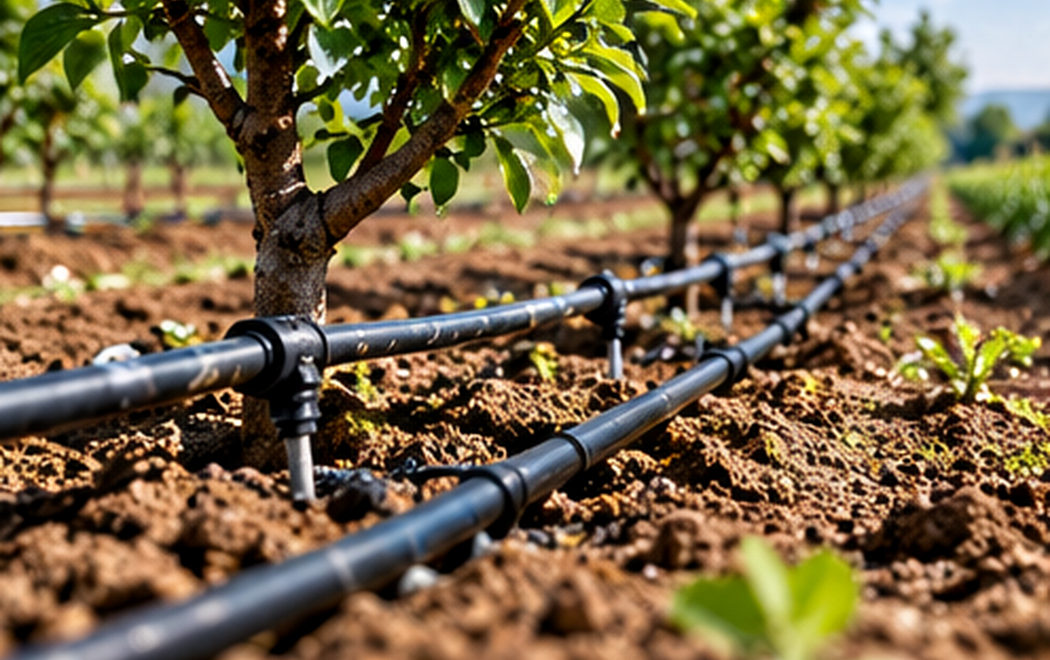
Buying emitters before measuring reliable water supply often leads to uneven irrigation. A sound design starts with field conditions, not a catalog.
Water salinity, available pressure, elevation changes and soil texture shape the size and operation of each irrigation zone.
Divide the site into independently controlled zones, size mains and laterals with hydraulic calculations, then verify operating pressure at representative endpoints.
A fixed water-saving percentage cannot be promised across different sites; baseline conditions and maintenance matter.
Share site maps, crop details and lab results to receive a useful engineering proposal.
Before handover, record flow and pressure at representative near and distant emitters. On sloped land, elevation affects distribution. Include filter care and flushing schedules in the handover file.
Poor filter and pipe sizing can create inconsistent emitter flow, not merely higher capital cost. FAO guidance on pressurized irrigation emphasizes water quality and site conditions; filtration and flushing schedules should reflect suspended solids and operating patterns.
At handover, log pressure at each zone inlet, sample emitter flow along the line and document filter maintenance. Avoid universal water-saving percentages without a measured baseline.
Share a relevant question or experience.
GuidesWhat information helps us understand your orchard and project?
 Practical guide
A realistic greenhouse plan evaluates utilities, climate control, working capital and sales.
Your inquiry is routed to this department.
No comments yet. Share your thoughts.